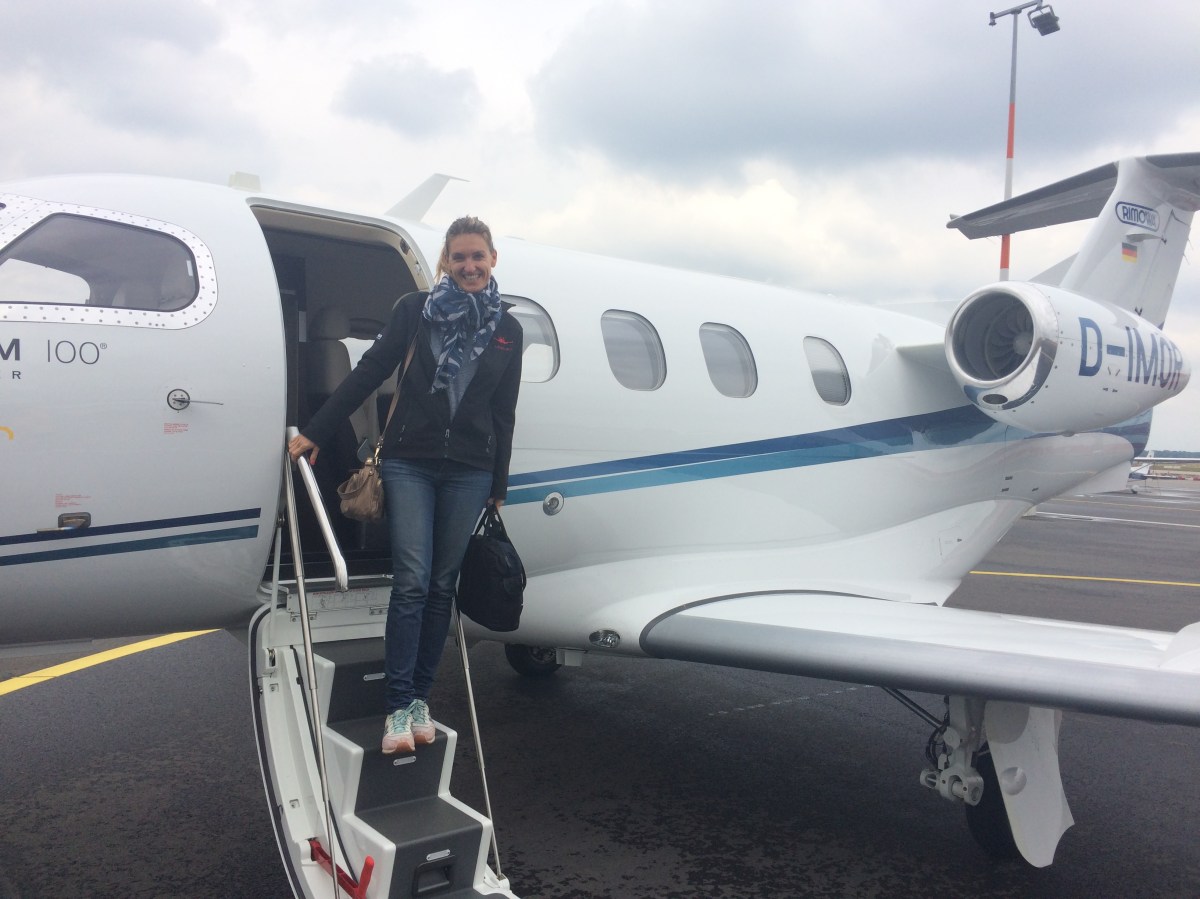
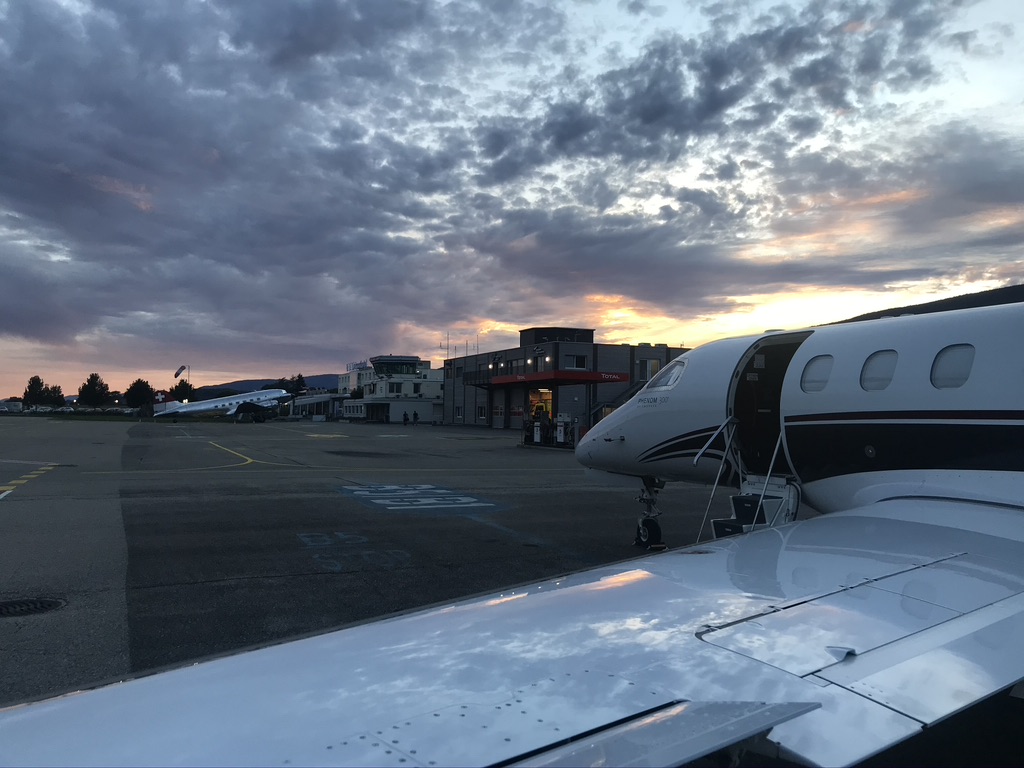
Checkflüge für EMB500/505 auch kurzfristig
und Type Rating Phenom 100 / 300

Checkflüge für EMB500/505 auch kurzfristig
und Type Rating Phenom 100 / 300
RNP Approach – practical and theoretical Training
The expansion of Global Positioning System (GPS)-based instrument approach procedures (IAP), a key element of NextGen’s Performance Based Navigation (PBN) initiative, provides benefits for pilots.
“RNP Approach (RNP APCH)” and titled Area Navigation (RNAV), “RNAV (GPS) Rwy XX”.
These procedures offer several lines of minima to accommodate varying levels of aircraft equipage and airport environments without requiring additional navigation equipment at the airport. This promotes airport efficiency and access, pilot exibility and operational safety.
RNP is RNAV with the addition of onboard performance monitoring and alerting capability.
Advisory Vertical Guidance
Depending on the manufacturer, WAAS-enabled GPS units might provide advisory vertical guidance in association with LP or LNAV minima. The manufacturer should use a notation to distinguish advisory vertical guidance (e.g. LNAV+V). The system includes an arti cially created advisory glide path from the nal approach x to the touchdown point on the runway. The intent is to aid the pilot in ying constant descent to the MDA. LNAV+V is not the same as LNAV/VNAV or LPV. Pilots must use the barometric altimeter as the primary altitude reference to meet all altitude restrictions. Advisory vertical guidance is not required and is an optional capability.
Approved Vertical Guidance
Approved vertical guidance provides operational bene t permitting the use of the LPV, LNAV/VNAV and ILS lines of minima. WAAS vertical guidance can support LPV minima as low as 200 feet AGL. Approved vertical guidance is available on LNAV/VNAV minima and existed before the WAAS system was certi ed. At that time, only aircraft equipped with a ight management system (FMS) and certi ed baro-VNAV systems could use the LNAV/VNAV minimums. Today, LNAV/VNAV minima may be own using approved WAAS equipment. Pilots must use the barometric altimeter in a similar fashion for ILS, LPV, and LNAV/VNAV minima.
Barometric Aiding (Baro-Aiding)
Barometric aiding is an integrity augmentation that allows a GPS system to use a non-satellite input source (e.g. the aircraft pitot-static system) to provide vertical reference and reduces the number of required satellites from ve to four. Baro-aiding requires four satellites and a barometric altimeter input to detect an integrity anomaly. The current altimeter setting may need to be entered into the receiver as described in the operating manual. Baro-aiding satis es the Receiver Autonomous Integrity Monitoring (RAIM) requirement in lieu of a fth satellite.
Barometric Vertical Navigation (Baro-VNAV)
Baro-VNAV uses barometric altitude information from the aircraft’s pitot-static system and air data computer to compute vertical guidance for the pilot. The speci ed vertical path is typically computed between two waypoints or an angle from a single way point. When using baro-VNAV guidance, the pilots should check for any published temperature limitations on the approach chart which may result in approach restrictions.
flight-training-berlin bietet die Möglichkeit mit einer Piper Cheyenne PA31 T2 zu fliegen.
Type Ratings PA31T und PA-42 Cheyenne III and IV zu verlängern, erneuern oder damit zu beginnen.

Personalized training for today´s busy pilot.

The Piper Cheyenne Initial Ground and Flight Training course, including all models of Piper Cheyenne, is all about getting you familiar with the aircraft and its systems. At course completion you will have a good understanding of the aircraft and associated systems.

All training is conducted in your aircraft. At flight-training-berlin, we realize everyone has their aircraft set up the way they like it. Therefor, training in your aircraft will prepare you to fly your specific set up and achieve mastery of your aircraft. In addition, our instructors have vast experience flying the Piper Cheyenne models and can provide you with real world scenarios. Your instructor can either travel to your location and conduct training at your home base or you can travel to one of our training locations.
IFR-Schnupperflug – Ein Praxisseminar im Cockpit!
Das Praxisseminar bietet im Anschluß an die Theorie gleich die erste richtige IFR- Trainingsstunde.
Im IFR-Schnupperflug Praxisseminar erklären wir zunächst die Grundlagen der neuen europäischen IFR-Ausbildung nach Competency-Based IR und Enroute-IR.
Im zweiten Teil des Seminars briefen wir einen typischen IFR-Trainingsflug mit Ihnen.
Im dritten Teil des Seminars machen wir diesen Flug!
Mit Ihrem Flugzeug oder mit einer unserer Maschinen. Genauer gesagt, machen Sie diesen Flug unter Anleitung unserer IFR-Lehrer. So haben Sie am Ende die erste Stunde echten IFR-Trainings für Ihre Ausbildung geloggt!
Termin: Sie bestimmen den Termin nach Ihrer Zeit
Zeit: 9:00 bis 16:00
Ort: Flugplatz Schönhagen / EDAZ
oder an Ihrem Heimat Flugplatz
Kosten: 300,– Euro pro Person (Mindestanzahl 2 Personen)


 Flight Training Berlin / flight instructor berlin
Du muss angemeldet sein, um einen Kommentar zu veröffentlichen.